 Kildare:






4 Ways To Make January Work For You
Of all the months in the year, I’m pretty sure January is one of the worst to trigger any major life-changing decisions that could wait a little longer. Especially if you’re in the coldest parts of the world at this time with short days and cold nights. So while everyone is throwing around headline-grabbing trends for 2023, here’s a few thoughts on how to set yourself up for a positive year and all the opportunities that could lie ahead.
It’s the perfect time to practice a little hygge, hibernation and self-care
January tends to bring out two potentially conflicting tendencies, often regardless of personality type. The first is an overwhelming desire to drive things forward at speed, putting into practice new resolutions, habits or regimes personally or professionally. The second is to hibernate, re-centre and refill the tank in readiness for the year ahead. Like most things in life, you can enjoy both states, but not to the extreme at the same time. Hygge and its relation Lagom may have had their breakout moment some time ago, yet both feel just right as we enter 2023 with all of its opportunities and uncertainties. Here is a great little article from The New Yorker to help you reset and reinvigorate yourself for the year ahead.
It’s a good time to embrace ‘essentialism’ and say no more often
While the concept of Hygge should make you feel all warm, cosy and cared for, it’s essentialism that will help you focus on making wise choices about how you use your time and energy. If you find it difficult to set boundaries, get things done and focus on what’s meaningful then the concepts in Greg McKeowan’s “Essentialism: The Disciplined Pursuit of Less” could set you up for the year ahead. This step-by-step approach could help you resist FOMO, break away from the herd and put a few building blocks in place to make 2023 an adventure in the things that matter most to you.
It’s the right time to focus on the everyday over the epic
It’s amazing how the death-by-a-thousand-cuts effect of the everyday can rob you of your best efforts to achieve incredible things and drag you down. I’m talking about never being able to find what you’re looking for at home or work and having to make awkward diversions in order to perform the simplest task. It’s amazing what you learn to live with and how its accumulative effect can de-energise you. I’m thinking less of Marie Kondo and her KonMari method of decluttering and more of simply addressing the small things that can (quite literally in some instances) trip you up everyday. The big things in life matter and the small things do too according to The Mayo Clinic if you’re serious about reducing stress and living your best life.
It’s the ideal moment to embrace connection over goals
Harvard researchers have spent nearly 80 years tracking what helps us to live longer and happier lives. It’s not money, fame or power, it’s actually relationships, connection and community. So while it’s a cliche to cite the ride as much as the destination, it is good advice to take now rather than find ourselves regretful later. So rather than making this the year you get fit or get that promotion, you may well find enriching and enlarging your connections to be the thing that brings you most success and joy this year.
To read the full article please click:
https://www.forbes.com/sites/sairahashman/2023/01/03/4-ways-to-make-january-work-for-you/

Christmas Opening Hours
Season’s Greetings from the Clark team

Chief Executive Officer opportunity with RACE
Clark is delighted to partner with Racing Academy & Centre of Education (RACE) for the recruitment of a Chief Executive Officer to lead, inspire and develop the strategic agenda for Education and Training for Ireland’s only dedicated training and educational academy for the Thoroughbred Industry. Based in Kildare town close to The Curragh Racecourse this role is an integral role in providing accessible solutions of education, training, and development for the Thoroughbred Industry.
RACE is Ireland’s national academy for the horse racing industry, a not-for-profit educational enterprise and registered charity providing training and further education services for a broad range of Irish and international clients in the Thoroughbred sector. Combining high performance and education RACE is a unique centre focused on bringing together the dual dynamic of sport and industry specific solutions in the space of high performance, education and development.
Reporting to the Board of Directors, Racing Academy & Centre of Education CLG your responsibilities will include but are not limited to the following:
Responsibilities:
- Promoting and cultivating a learning environment to facilitate agile and sustainable learning across a broad demographic and geographically dispersed base supporting a dynamic Industry
- Collaborate, design, and develop Industry specific solutions to lead standards in key areas
- Sponsor and develop the future of high performance for elite athletes – lead the evolution of high performance models for licenced Jockeys and racehorse trainers within the industry
- Business development including industry collaborations and strategic alliances (national & international)
- National and international stakeholder management on behalf of RACE. Representing RACE in national and international forums, public relations, fundraising activities to grow the commercial agenda
- Leadership and development of the management team and broader group of staff reporting directly and indirectly to the CEO
- Effective financial leadership and management
- Active collaboration with industry bodies and other stakeholders including educational boards and certifying bodies on quality assurance and output
- Development and implementation of corporate governance policies, procedures, and regulatory reporting
- Development and implementation of quality standards, safety and safeguarding environment and horse welfare
- Ongoing development of campus facilities, residential facilities, and services
Requirements:
- Minimum 5 years’ experience in a senior leadership role with direct responsibility for leading teams in either an educational or high performance sport environment
- Knowledge and experience of leading teams in areas of governance and change
- Strong stakeholder management experience
- Strong educational and personal development background. Knowledge of the education & training sector is desirable but not essential
- Proven ability to lead, develop and manage people and teams
- Passion for sport and people development
- Excellent communication skills and purpose-driven
- Strong commercial awareness and experience of strategic planning
- Flexible and adaptable mind set
Please contact Edel Smyth in confidence on 045 881888 or email your CV to raceceo@clark.ie
Closing date for applications is 10th December 2022 at 5pm.
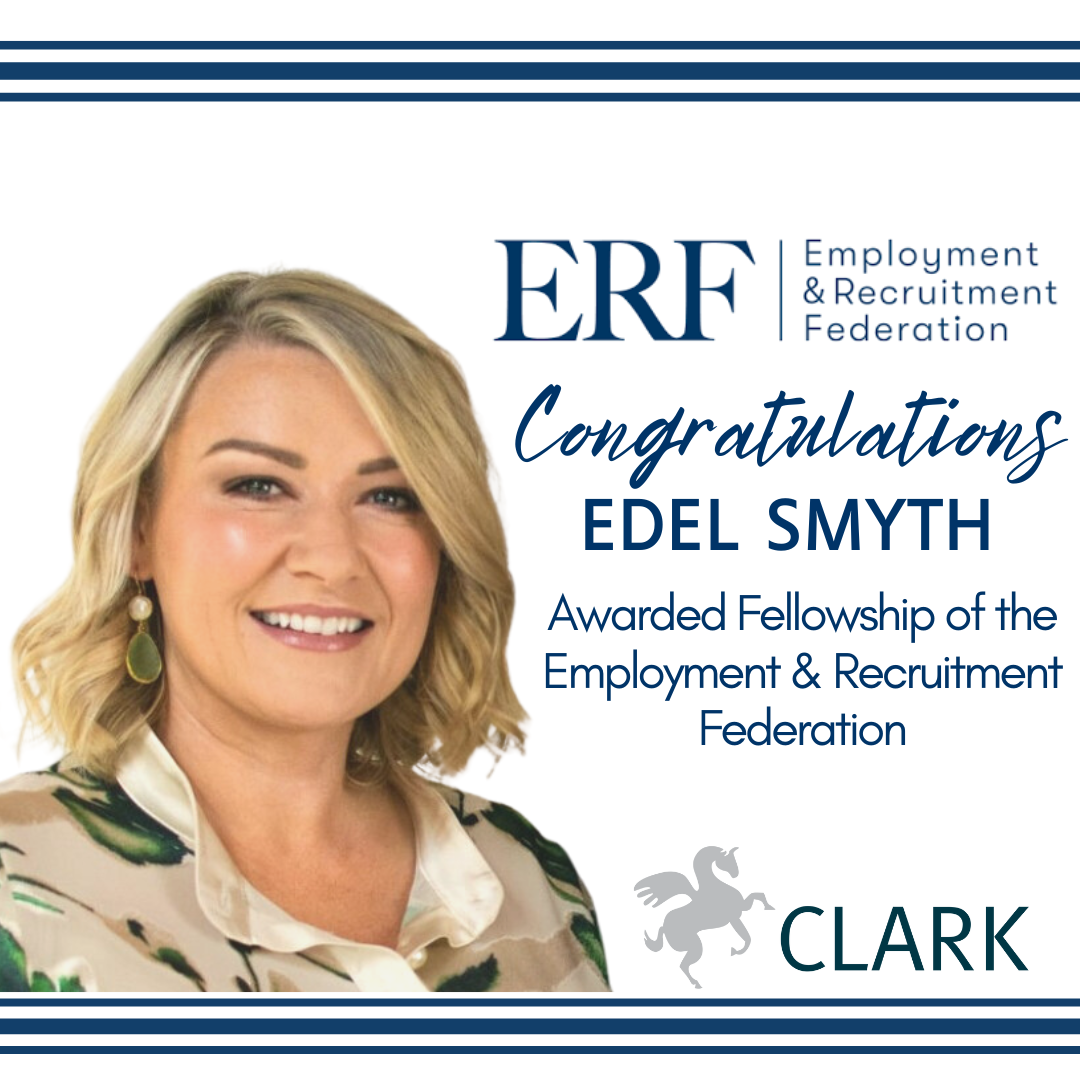
Congratulations Edel Smyth awarded Fellowship of the Employment & Recruitment Federation

Diversity in the workplace delivers for the bottom line
People seeking out business partners and employees who share their traits miss out on quantifiable benefits, research shows
American economist Paul Gompers has put a lot of time into studying the impact of diversity on business. He has looked at its effect on innovation and on performance, noting that hard evidence of its connection to the bottom line is not easily come by as pinning down what drives corporate decision making, especially in large organisations, can be difficult.
What Gompers, who is professor of business administration at Harvard Business School, needed was a test group operating within more limited parameters. This led him to the US venture capital industry because it tends to have a flat structure dominated by decision makers and the consequences of their decisions are usually pretty clear to see.
Gompers also chose this sector because its gender and racial composition has changed so little in almost three decades, with women and ethnic minorities hugely under-represented. Interestingly, however, Gompers found that VCs with partners who had daughters were more likely to hire women than companies with partners who had sons.
During research spread over a number of years, the Harvard professor looked at the investment decisions made by thousands of VCs. His findings are revealing. The more alike the teams, the lower their investment performance.
The success rate of acquisitions and IPOs was on average 11.5 per cent lower where partners had shared educational backgrounds (a quarter of all VCs with MBAs were Harvard graduates) while shared ethnicity reduced the investment success rate by between 26.4 and 32.2 per cent.
Writing about his research in a Harvard Business Review paper co-authored with research associate, Silpa Kovvali, Gompers says, “Diversity significantly improves financial performance on measures such as profitable investments at the individual portfolio/company level and overall fund returns. And even though the desire to associate with similar people – a tendency academics call homophily – can bring social benefits to those who exhibit it, including a sense of shared culture and belonging, it can also lead investors and firms to leave a lot of money on the table.”
To read the full article please click:

The Art of the Elevator Pitch
Hollywood screenwriters typically get three to five minutes to pitch their movie ideas, but it takes only around 45 seconds for producers to know if they want to invest. Specifically, producers are listening for a logline: one or two sentences that explain what the movie is about. If there is no logline, more often than not, there is no sale.
This is a valuable lesson for innovators in any field. Business leaders are often asked: What does your startup or product do? What’s your idea?
If they can answer in one compelling sentence, they can hook their audience and influence people to invest in their work. Though mastering the art of the logline is challenging, there are steps leaders can take to do so: (1) Keep it short. (2) Identify the one thing you want your audience to remember. (3) Make sure your team is on the same page.
To read the full article please click:
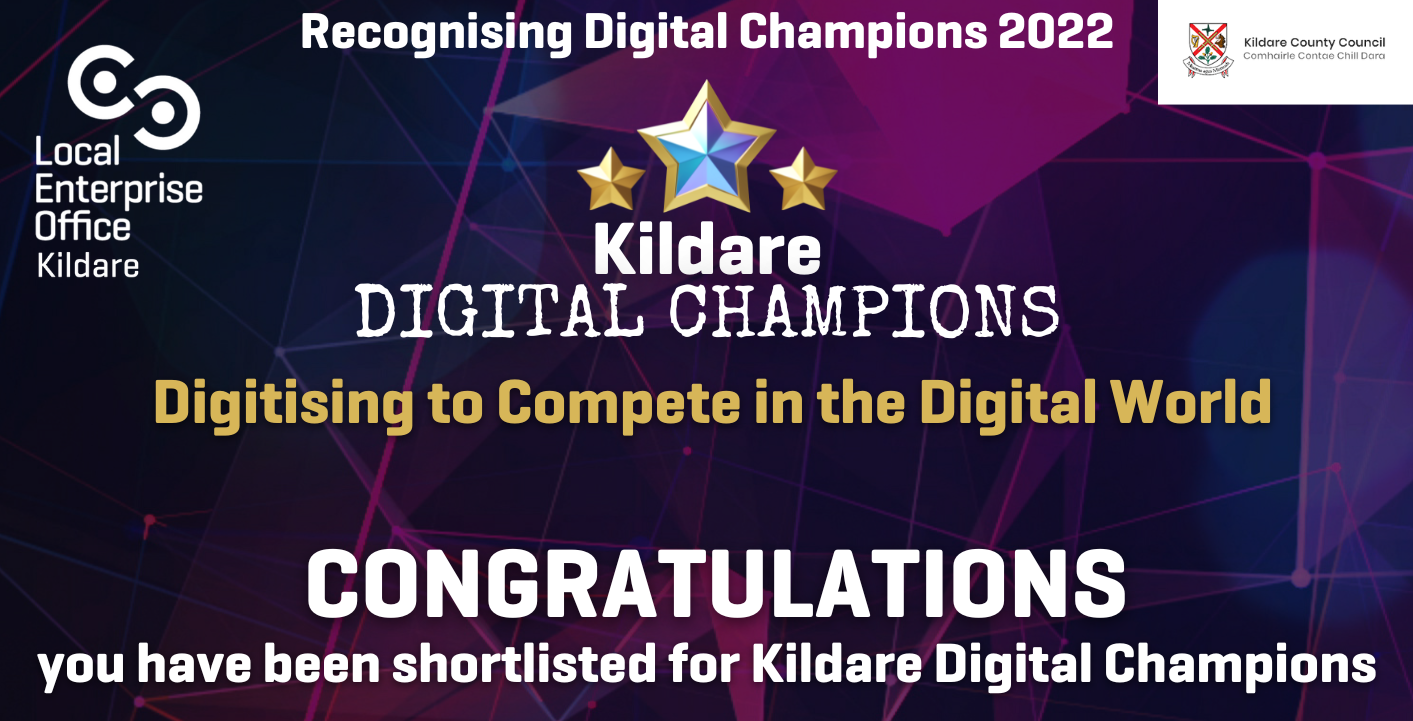
Clark announced as Finalists for the Kildare Digital Champion Awards

How ‘non-verbal communication’ is going digital
We’re used to reading body language and silent cues in person. With remote work, subtle ways we communicate are changing – and workers need to know how to adapt.
For the most part, our learned social skills mean most of us have some level of fluency in interpreting others’ non-verbal communication; it also means we know how to tacitly communicate ourselves. Think about, say, your inherent knowledge to smile when greeting a client, make eye contact in conversation and hold confident body language during an interview.
“If you want to influence people in a positive way, then your attitude and how you are perceived using non-verbal communication is very important,” says Mi Ridell, an expert in body language based in Stockholm, Sweden. Annemieke Meurs-Karels, a non-verbal communication expert based in the Netherlands, says people often react more to what you do than what you say, “because it communicates the underlying message – what you really think and feel, and your intentions”.
However, while we’ve been trained on the importance of non-verbal cues in person, in the digital workspace, this kind of communication can seem less important. Many work conversations now happen via online chats, and even video meetings can go ahead with cameras off. Yet, even when remote work doesn’t seem to include tacit cues, non-verbal communication is still happening. Take that switched-off camera, for instance: a 2022 survey of 200 executives showed that 92% of managers believed that employees who turned off their cameras during meetings were less likely to have a long-term future at their company.
Non-verbal communication is a two-fold concept.
Part of the equation is how others perceive you, and the other component is how you understand others through their own non-verbal messages. It is not an exact science, since there’s plenty of ambiguity in how you might interpret someone’s signal versus how another person might, says Meurs-Karels; it often depends on your own experiences and relationship to the communicator. The same can happen to you when you’re the communicator, of course.
Yet, despite these subjective discrepancies, the experts says non-verbal cues carry a lot of meaning for both parties – and it’s important to pay attention to them in any work environment, whether in-person or remote.
To read the full article please click:

How to Help an Employee Figure Out Their Career Goals
It’s not always possible to help the people we supervise identify and work toward their career goals. But having a sense of purpose and a feeling of momentum in achieving our career goals is powerful — so when we can assist our employees in getting there, it’s a meaningful way we can make a difference in their lives and their professional success. In this piece, the author offers three strategies managers can use if they’re managing someone who is unsure of their career path: 1) help them analyse patterns, 2) expand their worldview, and 3) don’t steer too hard.
To read the full article please click:
https://hbr.org/2022/10/how-to-help-an-employee-figure-out-their-career-goals