 Kildare:





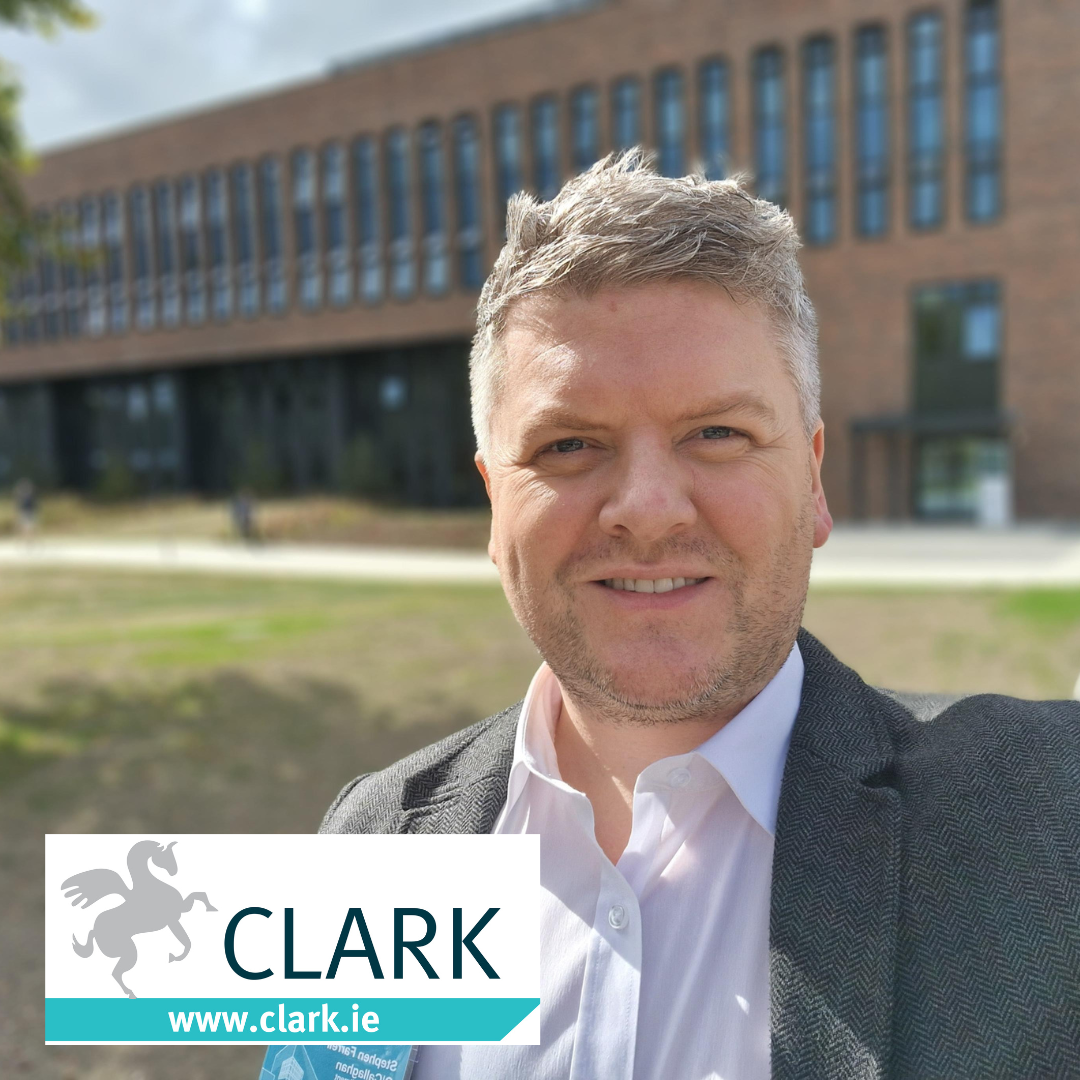
Clarks Commitment to Diversity, Equality, and Inclusion
We are witnessing a global movement towards greater recognition of and appreciation for the value of diversity. Organisations globally are embracing initiatives to embed diversity, equality, and inclusion into the workplace with an effort to move beyond traditional unconscious bias training towards a focus on action and allyship.
As interest in this area is gaining momentum, Clark remains uniquely positioned to support broader adoption of DEI by employers throughout our recruitment processes.
For almost 25 years, we have been continuously innovating and improving our processes solutions with powerful and transparent technology and data science. Our approach is designed to help reduce common biases so that organisations can make the best and fairest decisions through application of the following principles:
- Fairness: our recruitment processes and systems are developed with the intention of providing a fair and inclusive experience for all candidates.
- Accessibility: Clark considers the accessibility of both our website, CRM, psychometric and aptitude assessment platforms, and the content itself.
- Research, Innovation, and Thought Leadership: we continually seek out information on the latest developments in best practice guidance working with master’s students from Maynooth University who carryout in depth research on our behalf.
- Partnerships: in our commitment to DEI, we work with communities of experts and have established partnerships, and this was at the forefront of our Keep Kildare Working Initiative during the Covid 19 pandemic and remains as a key priority during all our recruitment practices.
- Expert Services: our professional recruiters and HR associates are trusted advisers who help our clients maximize diversity, equality, and inclusion by leveraging best practices throughout the talent lifecycle while ensuring the candidates we represent get equal opportunities.
Research shows that diverse organisations are more likely to outperform those that are not diverse, with greater representation in terms of gender, ethnic, and cultural diversity leading to greater organisational success. Discover further steps that you can take to make your organisation a safer, happier, and more successful workplace.
For more information about how we can help you and your organisation recruit the best talent call Stephen Farrell O’Callaghan now on 045 881888.

Where Companies Go Wrong with Learning and Development
Not only is the majority of training in today’s companies ineffective, but the purpose, timing, and content of training is flawed. Want to see eyes glaze over quicker than you can finish this sentence? Mandate that busy employees attend a training session on “business writing skills”, or “conflict resolution”, or some other such course with little alignment to their needs. Like lean manufacturing and the lean startup before it, lean learning supports the adaptability that gives organizations a competitive advantage in today’s market. It’s about learning the core of what you need to learn, applying it to real-world situations immediately, receiving immediate feedback and refining your understanding, and then repeating the cycle. In order to begin practicing lean learning, organizations need to move from measuring credits earned to measuring business outcomes created. Lean learning ensures that employees not only learn the right thing, at the right time, and for the right reasons, but also that they retain what they learn.
To find out more please click:
https://hbr.org/2019/10/where-companies-go-wrong-with-learning-and-development

Changing Company Culture Requires a Movement, Not a Mandate
Culture is like the wind. It is invisible, yet its effect can be seen and felt. When it is blowing in your direction it makes for smooth sailing. When it is blowing against you, everything is more difficult. For organizations seeking to become more adaptive and innovative, culture change is often the most challenging part of the transformation. But culture change can’t be achieved through top-down mandate. It lives in the collective hearts and habits of people and their shared perception of “how things are done around here.” Culture change needs to happen through a movement, not a mandate. To create a movement in your organization, start by framing the issue in terms that stir emotion and incite action; then mobilize more supporters by demonstrating quick wins. Broadcast these wins to an even wider audience by leveraging employees’ social networks, and using symbolism and pockets of innovation to keep momentum going. It’s important to start with actions, not new mission statements or company structures, because culture change only happens when people take action. Show people the change you want to see.
To find out more please click:
https://hbr.org/2017/06/changing-company-culture-requires-a-movement-not-a-mandate

Gratitude goes long way in fostering employee engagement
The nature of work has changed. So too has the working environment and the key to being successful in this changed landscape is re-imagining the workplace with employee recognition at the centre.
At one time employee recognition was a narrowly defined concept largely confined to pay rises, year-end bonuses and maybe the odd gift card. More recently, and particularly during and post-Covid, it has moved much more into the realms of interpersonal relationships including peer-to-peer awards, service milestones and celebrating significant life events.
To find out more please click:
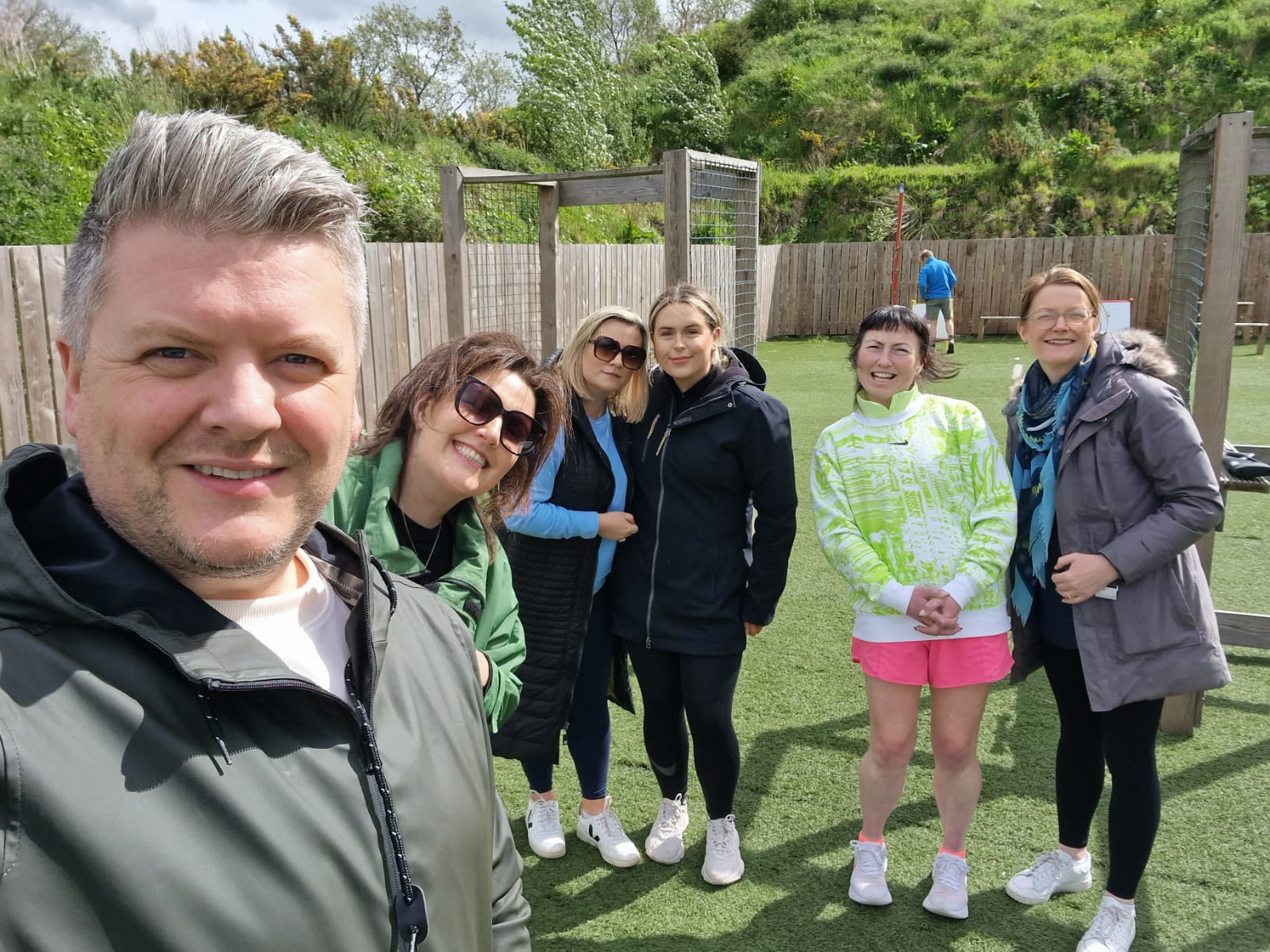
Making Joy a Priority at Work
Companies are making massive investments in technologies that can more closely link their people to each other, to customers, and to other stakeholders. Yet many struggle because their cultures get in the way — too many layers and silos, too many colleagues who prefer to stay in their comfort zones, bask in their KPIs, and resist new ways of connecting and working. This is a big problem. And joy can be a big part of the solution. Why? For two reasons. People intrinsically seek joy. And joy connects people more powerfully than almost any other human experience.
To find out more please click:
https://hbr.org/2019/07/making-joy-a-priority-at-work

How to Play to Your Strengths
It’s only natural to struggle with receiving negative feedback. In this article, the authors present a tool to help you understand and leverage your strengths, offering a unique feedback experience that counterbalances negative input.
This exercise, dubbed the Reflected Best Self (RBS), allows you to tap into talents you may not have been aware of and increase your career potential.
To begin, start gathering input from family, friends, colleagues, and teachers around what they see as your key strengths.
Next, search for common themes in the feedback to develop a clearer picture of these strengths. Next, write a description of yourself that summarizes and distills the accumulated information.
Finally, redesign your understanding of your ideal job description to build on what you’ve discovered you’re best at. Once you’re more aware of your best self, you can shape the roles you choose to take on — both today and in the next phases of your career.
To find out more please click:
https://hbr.org/2005/01/how-to-play-to-your-strengths
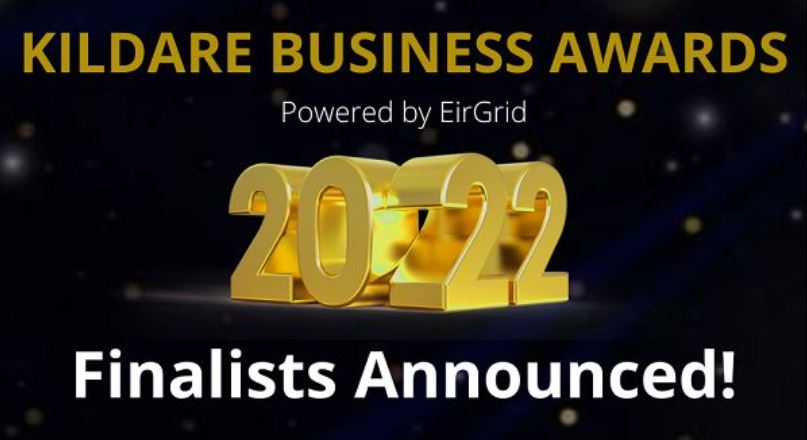
Clark announced as Finalist for Best Performing Business in the Kildare Business Awards
We at Clark Recruitment are delighted to be shortlisted as Finalists for the Best Performing Small-Medium Business of the Year for the upcoming Kildare Business Awards hosted by the County Kildare Chamber.
We’re in good company! Wishing the very best of luck to our fellow category finalists Barretstown, T&I Fitouts Ltd, and TERRA NutriTECH.
We look forward to a wonderful night on Thursday 24th November in the Killashee Hotel.
#business #bestinbusiness #kildarebusiness #kildarebusinessawards #awards #recruitment #finalists
To find out more please click:
https://www.kildarebusinessawards.ie/

In Uncertain Times, the Best Strategy Is Adaptability
Companies everywhere labour under the illusion that the key to a great strategy is a good handle on the future. But meteorologist Edward Lorenz demonstrated that small differences can have massive consequences or none at all, which means that unless you have a perfect, complete picture of existing conditions, forecasting the future with any precision is impossible. Instead, advises Bain’s Michael Mankins, companies should focus on making themselves better able to cope with unexpected changes. For strategy, that involves instilling an adaptive mindset among managers, building in flexibility into operations, creating dynamic plans.
For the full article please click:
https://hbr.org/2022/08/in-uncertain-times-the-best-strategy-is-adaptability

Ready to Move Faster in Your Career? Here’s How.
Telling people to “pay their dues” to move up the career ladder is no longer useful advice. We’re in a time where companies want to see immediate impact. Performing tedious or unchallenging busy work for years isn’t going to show that, and worse, it could burn you out in the process. So, how can you sidestep this outdated adage and get to where you want to go?
- Get better at feedback. The more you demonstrate to your colleagues and managers that you’re eager to learn, the more opportunities you’ll be given and the more chances people will be willing to take on you.
- Be a “dot connector.” If you’re new, this involves proactively building relationships with colleagues at various levels and in different departments. With this knowledge and these relationships, you can bring people together to elevate and improve the work happening across teams, as well as troubleshoot breakdowns in processes or communications between departments.
- Build your network. The friendships and connections you build in each new role will have the power to serve you years later. Bosses or colleagues from your first job, friends of friends — all of them have the potential to improve your career (whether themselves or through another contact).
For the full article please click:
https://hbr.org/2022/08/ready-to-move-faster-in-your-career-heres-how

A Simple Way to Introduce Yourself
Many of us dread the self-introduction, be it in an online meeting or at the boardroom table. Here is a practical framework you can leverage to introduce yourself with confidence in any context, online or in-person: Present, past, and future. You can customize this framework both for yourself as an individual and for the specific context. Perhaps most importantly, when you use this framework, you will be able to focus on others’ introductions, instead of stewing about what you should say about yourself.
The stress associated with introducing yourself is common and not without warrant. Everyone’s eyes and ears are on you. It’s easy to mess up. On the other hand, self-introductions are the most direct way to reinforce your desired personal brand. And they can be easy to do.
The secret is using a simple framework: Present, past, and future.
Present
Start with a present-tense statement to introduce yourself:
Hi, I’m Ashley and I’m a software engineer. My current focus is optimizing customer experience.
Nice to meet you all. My name is Michael and I’m the creative director. I work in the Brooklyn office.
Of course, what you share will depend on the situation and on the audience. If you are not sure what to share, your name and job title is a great place to start. If there’s an opportunity to elaborate, you can also share other details such as a current project, your expertise, or your geographical location.
Past
The second part of your introduction is past tense. This is where you can add two or three points that will provide people with relevant details about your background. It is also your opportunity to establish credibility. Consider your education and other credentials, past projects, employers, and accomplishments.
My background is in computer science. Before joining this team, I worked with big data to identify insights for our clients in the health care industry.
I’ve been at the firm for eight years. Most recently, I worked on the Alpha Financial account, where last year’s campaign won us a Webby award.
Future
The third and last part in this framework is future-oriented. This is your opportunity to demonstrate enthusiasm for what’s ahead. If you’re in a job interview, you could share your eagerness about opportunities at the firm. If you’re in a meeting, you could express interest in the meeting topic. If you’re kicking off a project with a new team, you could talk about how excited you are, or share your goals for the project.
I’m honored to be here. This project is a significant opportunity for all of us.
I’m excited to work with you all to solve our clients’ biggest challenges!
That’s it for the self-introduction framework. Present, past, future. Eloquent and effective. By using this approach, you’ll not only introduce yourself better, but it also frees you from ruminating on what you’ll say when it’s your turn to introduce yourself and allows you to listen when others introduce themselves. You will also make it easy for the person who introduces themselves after you, since you’ll conclude your self-introduction with positive enthusiasm.
The next time you’re in a meeting and someone says, “Let’s go around the table and introduce ourselves,” you know what to do. Take a slow, deep breath, and think, “Present, past, future.” Then smile and listen to everyone else until it’s your turn. You got this!
(Source: https://hbr.org/2022/08/a-simple-way-to-introduce-yourself)